what does lincoln have to say about the expansion of slavery beyond its current boundaries?
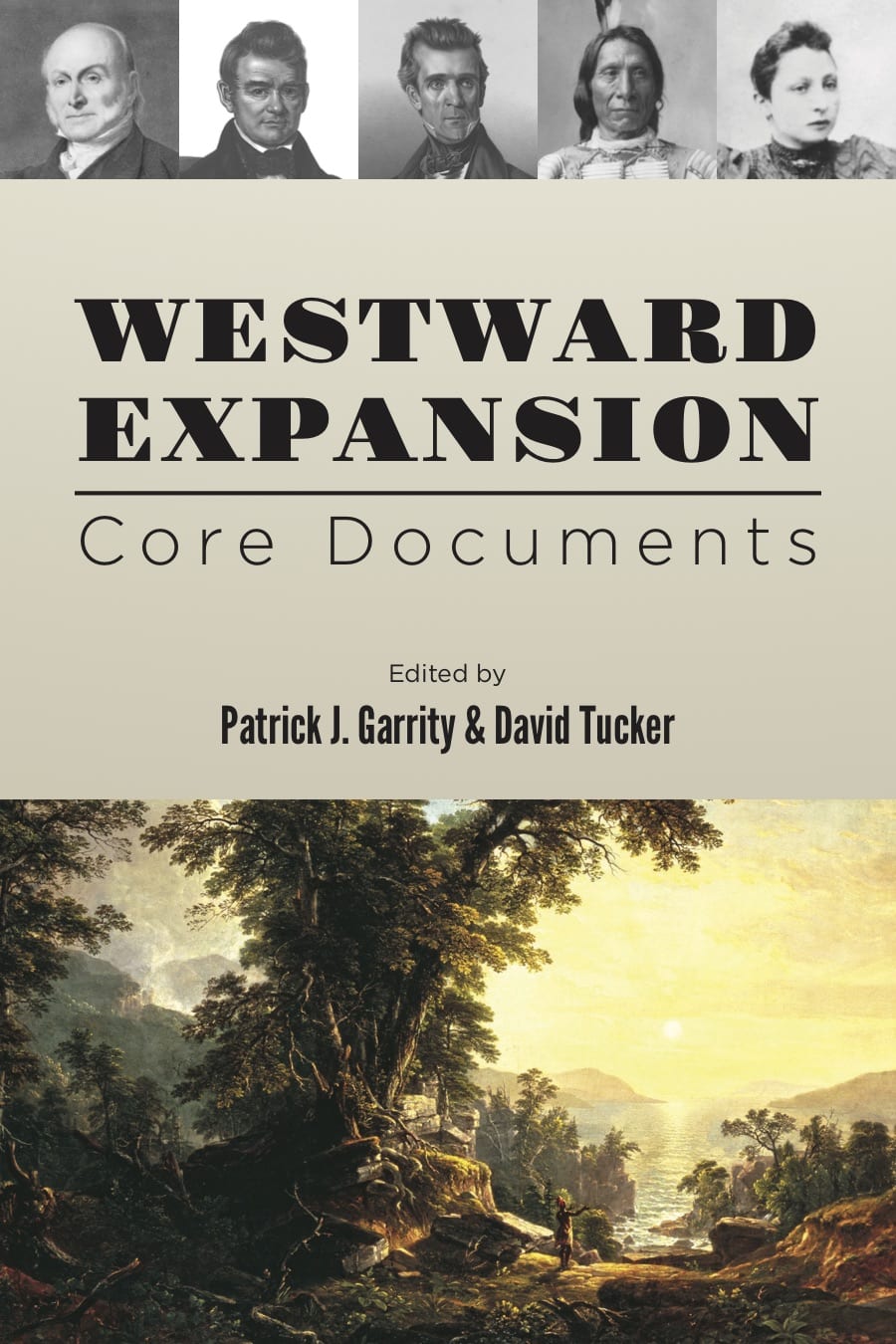
Cadre Document Volume W Expansion $12.99
The first Europeans to state in America traveled westward to practise so. Many of their descendants continued moving west for the side by side 250 years and after. They were joined past other Europeans, likewise as African-Americans and native Americans—some moved forcibly. In time their west move brought them into contact with Pacific Islanders and Asians, some immigrants to the expanding United States. The documents in this drove present the reasons Americans gave for and confronting westward expansion and their thoughts on the political, moral, and economical issues it raised. Preeminent among these issues were slavery and the fate of the native Americans. Americans were also concerned about where and when westward expansion should stop and the event that its ending would have on America. The documents and images in this volume also present the experiences of settlers, explorers, farmers, former slaves, and Indians struggling to build new lives in the w or hold on to aspects of old lives, equally west expansion transformed the land, those who lived on it, and the Us itself.
To understand this story, it is wise to avoid presentism—simply applying today'southward standards and sentiments to the by—even while rightly maintaining our moral objections to blatant racial prejudice and injustice. Nosotros must have into account the facts on the ground as well as the perspectives of politicians, businessmen, and ordinary citizens. Iii facts stand out.
Showtime, there was the search of the European settlers and their descendants for a improve, freer life, coupled with a massive demographic wave, fed by clearing. The American Revolution and the Constitution were designed to enable that ameliorate life under a novel class of regime—a federal democratic democracy. There were no barriers that any government of the time, much less that envisioned past the Founders, could accept erected to stalk the tide of a restless, enterprising people. The Founders instead intended to manage expansion advisedly so that information technology would be republican in character. They established a template past which territories not notwithstanding fully settled, or newly acquired, would follow a distinct path to statehood, at which bespeak they would enter the Union nether the Constitution, on par with the other states.
Second, there were geopolitical realities which not unreasonably created an imperative for expansion. Some leaders, like Thomas Jefferson, occasionally speculated that due west migration might lead to friendly sister republics on the other side of the Mississippi, just most feared that these would somewhen come into conflict with one another, unless united under one federal head. In the worst case, foreign powers would create client states or occupy the western territories themselves, bringing the Us into the maelstrom of European monarchical residue of ability rivalries and wars. American statesmen believed that unless the United States became a transcontinental ability with no strategic rivals, its republican form of government could not survive. Territorial expansion would be peaceful, orderly, gradual and limited to North America, allowing the United States to expand its commerce overseas.
Third, this ideal model of expansion was complicated—to say the least—by a 2-fold clash of cultures, or civilizations. The American lands were already occupied by peoples with very different views of what was meant by a better, freer life. Romantic views of the frontier aside, life for the settlers was oftentimes very hard. Farmland, individually endemic, provided their master means of beingness and hope of a better futurity. The Indian nations, or tribes, largely held a communal view of land, and claimed extensive holdings. As migration increased, native Americans became far fewer in number than the settlers, and it is only recently that we have realized fully the degree to which diseases carried over from Europe greatly weakened the tribes. The migratory swarm of Americans seeking land, many of them honest and law-abiding, some not, was spring to cause tension and conflict. During negotiations, who could speak authoritatively for the tribes was often in dispute, creating opportunities for misunderstandings and oftentimes fraud. As the documents reveal, the U.Southward. regime and private organizations by and large tried to practice the right thing, by their own lights and the Anglo-American concept of justice. Just facts on the footing never allowed full and satisfactory resolution of the civilizational differences.
The other disharmonism was within the Union itself, between the increasingly democratic capitalistic northward and the oligarchic system of slavery of the south—with the future of the west, and western expansion, very much at stake. The north gradually eclipsed the south in terms of population and wealth, peculiarly equally the quondam northwest entered the Union and anti-slavery sentiment grew (if not a desire for racial equality). The south demanded compensation, in terms of favorable laws, and territorial arrangements and acquisitions that assured a sectional balance. Some politicians, such as James Polk (1795-1849), thought that expansion would meliorate these sectional tensions by creating a higher national purpose that would unite north and southward. The state of war with Mexico proved exactly the opposite, as did proposals to aggrandize or condone slavery to the s. Had the southern Confederacy succeeded in the Civil War, the ii Americas undoubtedly would before long have disputed possession of the unincorporated western territories and California. Both nations would have been inclined to expand farther north and s to balance the other. Abraham Lincoln (1809-1865) resisted secession in part to forestall the geopolitical and moral nightmare of a slavocracy in North America, probably aligned with a hostile European power, rivaling the costless commonwealth of a diminished United States.
The bulldoze for continental expansion ceased in the generation later the Civil War (Mormonism and Jesuitism), except for the purchase of Alaska. But towards the turn of the twentieth century, some Americans argued for the need to establish overseas colonies (The Significance of the Frontier in American History, My Story) while others argued that this would exist a violation of the nation'due south republican principles. Whereas this volume focuses on expansion that resulted in the admission of new states, a forthcoming volume (American Foreign Policy) will encompass in item the story of America'due south relations with foreign powers and its acquisitions that remained territories.
For each of the documents in this collection, we advise below in section A questions relevant for that certificate alone and in section B questions that require comparing between documents.
The Northwest Ordinance
A. Why did Congress agree to admit new states on equal terms with the original xiii members of the Union, and not as colonies or with limited rights? What constitutes republican government, and who decides on its meaning? Should the western territories been allowed to form a split nation or nation, as some advocated? Should land have been given to new settlers to encourage their migration, or should it have been sold to allow the government to settle its debt and fund public projects such every bit education? Why did anti-slavery Congressmen back up the inclusion of a fugitive slave clause?
B. In light of the later on policy of the Washington administration toward the Indians, what did and should have constituted the "utmost proficient organized religion" towards the tribes? What might have happened if Congress had followed Jefferson's earlier recommendation to exclude slavery from all western territories?
Report on Indian Affairs
A. What did Knox hateful by an "honorable repose of the frontiers"? What in his view threatens this? How does he propose to accomplish it? On whom and for what reason does he place most responsibility for improving relations with the native Americans?
B. How practise the problems and solutions proposed past Knox compare with those of others who wrestled with the problem of American-Indian relations? Employ the following documents:
- Report of the Commissioner of Indian Affairs
- The Visit of Red Cloud to Washington, D.C.
- Arthur's First Annual Bulletin to Congress
- "Americanizing the Indian"
Letter of the alphabet to John Breckinridge
A. Why did Jefferson fear the establishment of a French empire by Napoleon in the Western Hemisphere? Should he have sought an alliance with Uk had Napoleon refused to deal with the United States? Should the American diplomats have declined the offer of the entire territory, and insisted instead merely on New Orleans and the Floridas, if France had acquired them likewise?
B. How did Jefferson'south plans for dealing with the Indians differ from those of his predecessors? Should Jefferson accept sought a constitutional amendment—or agreement by all the states. What were the possible consequences of not doing then?
Speech communication on the Constitutionality of the Louisiana Buy
A. What reasonable alternative was available to the United States, given the circumstances and Napoleon'south offer? On what grounds did the Federalists argue that the residents of Louisiana were unfit for republican government? The terms of the treaty aside, could the government constitutionally have ruled the territory equally a colony indefinitely?
B. Why was slavery outlawed in the Northwest Territory but not Louisiana? How would Tracy have responded to Jefferson'southward arguments?
The Transcontinental Treaty and American Expansion
A. Why would Adams limit American expansion to the northern hemisphere, but plain exclude Latin America? Why no overseas possessions or colonies? How were peoples who spoke a different language and had a different civilization and form of government — the Indians, Spanish-speakers, and French Canadians, among others — to be integrated into 1 people, especially if they resisted integration? How might the north American union be established peacefully, if at all?
B. Compare John Quincy'southward arguments for expansion with those of John O'Sullivan.
Seventh Almanac Message to Congress (Monroe Doctrine)
A. Why did Adams and Monroe determine not to cooperate with the British? How could the United States justify acquiring territories in the Western Hemisphere while denying that right to the absolutist European monarchies? Did America's republican grapheme thing? Would/should the United States accept used military strength to resist an invasion of South America or Mexico? Should information technology have sought a joint proclamation with the newly-contained nations, rather than acting unilaterally? What if any relevance does the Monroe Doctrine accept today, in a time of controversies over edge security and national sovereignty in a globalized globe?
B. How far upward the coast of the Pacific northwest should the Usa have been concerned? Why was the eventual acquisition of Cuba and Texas so important to the United States? Should information technology take resisted efforts by the Due south American nations to drive Spain out of Republic of cuba?
Second Annual Message to Congress
A. Did Jackson make a persuasive statement for Indian removal? Was his comparison of the Indians leaving their land to go due west and Europeans arriving in the Us, or Americans moving west accurate? In what ways were these movements of people like or unlike? Why might a fellow frontiersman like Davey Crockett have opposed Jackson's policy?
B. Compare Jackson'due south approach to the native Americans in this address with the that of the Washington administration. How are they alike or different? How had the state of affairs of America and Americans changed in the almost 35 years since Henry Knox wrote the written report to George Washington? What were the effects of Jackson's policy? If Jackson had been aware of these furnishings, would that have caused him to change his removal policy? Should it have?
Indian Removal
A. What kind of arguments does Ross utilize to appeal to the American people? Do y'all think his arguments are persuasive? Which statement do you retrieve is the strongest? What attitude towards the Indians does the military machine order instruct soldiers to accept? What does the order mean when it states that "the Major General is fully persuaded that this injunction volition not be neglected by the brave men under his command, who cannot exist otherwise than jealous of their own honor and that of their country."
B. Compare Ross' argument with Justice Marshall'southward in Worcester v. Georgia. Do Ross and Marshall make the same argument? How would you characterize whatever differences in the arguments?
Worcester five. Georgia
A. Justice Marshall raises the question of whether the state of Georgia had jurisdiction over the Cherokee. How does the history of European American and native relations behave on his reply to this question. Why do you think President Jackson refused to abide by the determination of the court?
B. Compare Justice Marshall's argument with Ross's in Indian Removal. Do Ross and Marshall brand the aforementioned argument? How would you narrate any differences in their arguments? Do Ross and Marshall have the same estimation of the treaties of Hopewell and Holston?
Letters and Journals from the Oregon Trail
A. Other than missionary activity, what motivated women like Narcissa Whitman and their families to migrate due west? Why did the settlers retain their connectedness with the Union and not try to establish a split up nation? What result did affliction have in the settlement of the w?
B. How did relations with the native tribes in the west differ from those of the east and southward at this time. Utilise these documents:
- Jackson's Second Annual Message
- Indian Removal
- Worcester v. Georgia
What affinities and resentments did the tribes have with the settlers? Why did President Polk not resort to war with United kingdom to settle?
Special Bulletin to Congress (The Tyler Doctrine)
A. Why did the The states non make a tripartite understanding with United kingdom of great britain and northern ireland and France, or outright addendum Hawaii at this time? What responsibilities did the United States have to its citizens and merchants outside its sovereign territory? What pressures did this create for territorial and/or commercial expansion?
B. Why and how did slavery affect the decisions most territorial expansion? Were at that place geographical or political limits to the expansion of a confederal democracy?
Alphabetic character to the Editor of the Washington National Intelligencer Opposing the Annexation of Texas
A. What reasons would the United States have to seek the looting of Texas at this betoken, virtually a decade after it had alleged its independence? What would the Usa have done if the government of Texas had refused the terms of looting, as some Texians wished to remain independent? What might have been the long-term effects of an independent Texas Republic on the future of slavery and U.South. security?
B. Why would Clay, who had strongly advocated the acquisition of Texas during the negotiations with Spain over what became the Transcontinental Treaty, now oppose information technology? Why did he fear that Britain or French republic might go to state of war with the United states on behalf of Mexico?
Letter to Richard Pakenham, British Government minister to the United States
A. Why would Calhoun deliberately interject the upshot of slavery into the thing of expansion and the looting of Texas? Could the United States accept accepted an independent Texas, with or without slavery, allied with Britain? What outcome might that have had on time to come American expansion?
B. How would Calhoun respond to the arguments of Clay in the Raleigh letter? Would the prospects for sectional harmony, and farther expansion, have been increased by the division of Texas into a complimentary and a slave state?
Annexation
A. On what grounds does O'Sullivan justify American annexation of Texas? If the regime and voters of Texas had disapproved looting, how might O'Sullivan take reacted? Should the United states take made annexation contingent on a Texas constitution complimentary of slavery? What might have happened had the Democracy of Texas remained independent? O'Sullivan speaks of the continuing growth of the Usa every bit resulting non from the "bureau of our government" or the "responsibility of our people," simply from "the natural menstruum of events, the spontaneous working of principles, and the adaptation of the tendencies and wants of the human race to the elemental circumstances in the midst of which they find themselves placed." Does the historical record support O'Sullivan's merits?
B. How do O'Sullivan's arguments in favor of looting differ from those of Calhoun? How might have Clay responded?
Special Message to Congress on Mexican Relations
A. Why was Polk and then broken-hearted to secure California and New United mexican states? Was the Us justified in sending troops into disputed territory, even if supposedly justified by military necessity? Should Polk have insisted on the conquering of all of the Oregon Territory? Should the The states have abandoned its claim to the Rio Grande border?
B. Was Henry Dirt right in predicting that war with Mexico was the inevitable event of Texas annexation, or were there means to avert state of war, such as further diplomacy? What arguments might Congressmen might have made for and against a proclamation of war had the clash between U.S. and Mexican forces not taken identify?
Speech on the State of war with Mexico
A. On what grounds did Lincoln and opponents of the war object to its constitutionality? Why did Lincoln, an anti-slave Whig (but not an abolitionist) not explicitly enhance the question of slavery in his speech? On what grounds might Lincoln take supported territorial expansion? Why did he choose to use—selectively—language similar to that of the Declaration of Independence in his statement nearly the legitimate control and governance of territory?
B. How would Lincoln accept responded to John O'Sullivan's arguments nearly expansion? If the state of war had gone desperately and Mexico had occupied office of the United States, would Lincoln have approved a peace in which the United States surrendered territory to Mexico?
Annual Bulletin to Congress
A. Would Polk accept increased or moderated his territorial demands if the state of war had connected— if the latter, what would he have settled for? Would the opponents of war and territorial acquisition take inverse their minds had they known about the discovery of gold in California? Why did Polk'due south conventionalities that the slavery upshot would be prepare bated in the wake of expansion be proven incorrect?
B. Why did Polk take a more aggressive policy line than the Manifest Destiny approach advocated by John O'Sullivan? If the latter arroyo had been followed, what might the territory of the United States await like today, and what might be its political and social character? Or if the United States had taken nigh or all of United mexican states? Or had not expanded further than it had in 1846?
The Destiny of America
A. Why is Seward apparently so sanguine about resolving the slavery issue, clearing the way for future expansion? Given his argument, is there any logical geographic limit to expansion and the incorporation of new territories into the Union? How do his arguments virtually globalization based on a common humanity compare with those of today?
B. How does Seward'southward vision of expansion differ, if at all, from those of John Quincy Adams and John O'Sullivan?
Speech on the Kansas-Nebraska Act and Racial Hierarchy in International Relations
A. Why was a northern route for the transcontinental railroad so of import to Douglas? What would take been the outcome of a southern road, through Texas, as many southerners preferred? Would it accept increased or lessened their interest in expansion? What if Taney had ruled that those of African descent were citizens, and that slavery was prohibited in all current and futurity territories?
B. What might accept happened had Stephen Douglas, rather than Lincoln, been elected president in 1860? What might have happened had Lincoln agreed to compromise, by permitting slavery in any new territory that might be acquired beneath 36-30? In that case, would the annexation of Canada every bit gratis territory have created a sustainable exclusive balance?
Proclamation
A. Does the Committees' proclamation justify their deportment? They appeal to the power of the people and the rights of the majority. Do they provide sufficient protection for the rights of the minority? Nosotros accept the argument of the Declaration of Independence that the people take the correct to alter their government, but was it applied correctly in this case? How do we make up one's mind if the power of the people is organized and expressed legitimately? Is the Committee of Vigilance unlike from a lynch mob? Does the fact that the committee became a political party and won elections show its deportment justified?
B. Are the Cherokee and the Hawaiians appealing to the same principles as the San Francisco Vigilance Committee? Why did the Vigilance Committee prevail and the Cherokee and Hawaiians fail in their efforts to organize and protect their different ways of life?
Oral communication on the cession of Russian America to the The states
A. Why does Sumner decline the arguments of Jefferson? Of Jackson? Why does he retrieve that the acquisition of Alaska will cement the political as well every bit economical unity of land? What might the principal arguments against the purchase exist? What would accept been the consequences of British acquisition of Alaska?
B. How would have Sumner assessed the arguments of O'Sullivan? or Seward for expansion? Which, if any, of the policies would you recommend—or reject—for treating the indigenous population of Alaska? Utilise these documents:
- Jackson'south Second Annual Message
- Written report of the Commissioner of Indian Affairs
- Arthur's Showtime Annual Message
- "Americanizing the Indian"
Report of the Commissioner of Indian Affairs
A. Are Parker'south comments most the uncivilized graphic symbol of the Indians surprising, since he was himself an Indian? Why do you call up Parker considers the Indians uncivilized? Why did Grant think that owning land every bit individuals, instead of the tribe owning the land for all its members, would make the Indians more civilized? What does he think is the best style for the regime to deal with native Americans? Why does he believe that it is inappropriate for the United States to make treaties with the Indians? Was Parker right that what he calls a philanthropic approach to the Indians was harmful?
B. Compare Parker's view of making treaties with the Indians with the account given by Chief Justice Marshall. Which seems the correct view? How does the new approach described past Parker in the beginning of his report differ from the approaches advocated by Henry Knox and Andrew Jackson?
The Visit of Ruddy Deject to Washington, D.C.
A. What does the episode with the cannons in the Washington Naval Yard tell us almost how official Washington and the native Americans understood each other? How would y'all characterize the attitudes of Secretary of the Interior Cox and Carmine Deject? Given that the Sioux were displacing the Crow, was Reddish Cloud right to protestation the displacement of the Sioux? Are the two situations comparable? How might they differ?
B. Considering Jackson'due south 2nd Almanac Message and the Indian Removal document collection, had xl years of additional feel inverse the attitudes or problems betwixt native Americans and Americans? What are the fundamental problems between them?
The Farmer ' south Move
A. Based on the excerpts of the Kansas Clan and the Grange, what would yous say are the differences between the ii organizations? Why does the Grange highlight that In our noble Order there is no communism, no agrarianism"? Why are the farmers concerned with traiffs? What does their fence on the resolution evidence to be their attitude toward them?
B. Compare the last lines of the document with the concluding lines of the Declaration of Independence. What similarities do you see? Why practice you think they exist? In "Americanizing the Indian", reformers advise to civilize the Indians past making them farmers. Based the Farmer'due south Movement document collection, what do you think they meant past civilizing the Indians?
The Great Valleys and Prairies of Nebraska and the Northwest
A. Wilber makes disparaging remarks about native Americans. How is his attitude toward the Indians connected to what he says almost rain following the plough?
B. Compare Wilber's argument with the testify presented in epitome B.
First Annual Message to Congress
A. What did President Arthur mean when he spoke of "civilized life"? Why did he call back that private buying of land would lead to or make more likely a civilized life? Why does Arthur put such emphasis on education, not just for native Americans, only for other Americans likewise?
B. How do the U.S. government policies appear in these documents differ? What remains constant? Employ these documents:
- Report on Indian Affairs
- Jackson's Second Almanac Bulletin
- Report of the Commissioner of Indian Affairs
Americanizing the Indian
A. Why did the participants at the Mohonk Conference think that the Dawes Human activity would help acculturate the Indians? What did the participants at the Conference see every bit the problems facing the Indians even after the Dawes Act? What were the different ways they proposed to deal with these problems? Does the analogy that speakers drew between the Indians and the former slaves seem reasonable? Is the minority study correct in arguing that Dawes Act is contradictory in arguing that the Indians are similar other men, but unlike other men require continued protection?
B. Compare the arguments and plans of the Friends of the Indians with the arguments and proposals in the post-obit documents.
- Study on Indian Affairs
- Jackson's 2d Almanac Bulletin
- Indian Removal
- Worcester five. Georgia
- Written report of the Commissioner of Indian Affairs
- The Visit of Red Deject to Washington, D.C.
- Arthur'south Offset Annual Message
Do sure attitudes towards and plans for the Indians remain constant in all the documents? What are the differences?
The Ghost Trip the light fantastic Organized religion amidst the Sioux
A. How exercise the accounts of Kicking Deport and Mrs. Parker differ? Do they present the aforementioned facts virtually the dance? Exercise they present the same facts in the aforementioned way? Is Selwyn suspicious of Kuwapi from the beginning of his questioning of him? Is he asking him questions designed to become answers that he wants?
B. How do you think the Friends of the Indians (Americanizing the Indian) would accept responded to these accounts of the Ghost Dance? What would they take idea of references to a Messiah and resurrection? What do yous call back the Indians meant by such terms?
Mormonism and Jesuitism
A. Why does Gunsaulus assail both what he calls Jesuitism and Mormonism? What is the common threat he thinks they pose? Why does he think the threat from Catholicism is greater than the Mormon threat? What does Gunsaulus offering as an alternative in each case? Why exercise you think the Commission called itself the New W Education Commission?
B. The Northwest Ordinance states that "Religion, morality, and knowledge, being necessary to skilful government and the happiness of mankind, schools and the means of education shall forever be encouraged." Was the New West Education Commission acting in accordance with the Northwest Ordinance? How does the attitude of the Commission toward Catholics and Mormons compare with the attitude toward the Indians? What are the similarities and difference in the attitudes of Gunsaulus and President Arthur toward the westward?
Plenty Horses Kills Lieutenant Casey
A. How would you draw the attitude of McGillycuddy toward the Indians? Why does he quote Carmine Cloud and Little Wound? Why does he think the fighting and Wounded Genu occurred?
B. How practise you remember the Friends of the Indians (Americanizing the Indian) would have responded to the argument of Plenty Horses at his trial? Given the reports on the Ghost Dance, was McGillycuddy right in his assessment of the Ghost Dance?
The Significance of the Borderland in American History
A. Why does Turner believe that the frontier west, not the coastal east, defines the American character? Why does Turner regard slavery as role of the story of the borderland and American expansion?
B. How did violence correspond and shape the American Western character? How might Turner have responded to Rev. F.W. Gunsaulus'south warnings most Mormonism and Jesuitism in the W? How does the borderland feel described by Turner compare with the actual experiences of Narcissa Whitman and Rachel Calof?
My Story
A. If Calof had known equally an xviii year former adult female what life would exist similar in the early on years in Northward Dakota exercise y'all think she would take agreed to marry Abraham? Why practice you think Rachel and Abraham were able to persevere as pioneers when others did non?
B. Compare Calof's account with Whitman's. What are the differences? What accounts for them?
The Looting of Hawaii
A. Should the United States have annexed the Hawaiian islands?
B. Compare the arguments for and confronting the U.s. taking control of the Hawaiian islands with those made about Indian lands and Louisiana. Do the arguments differ? In each instance, what was the relative importance of principle (the dominion of the people) and practical considerations? Utilize these documents:
- Jackson'south Second Almanac Message
- Indian Removal
- Worcester 5. Georgia
- Letter to John Breckinridge
- Speech on the Constitutionality of the Louisiana Purchase
The March of the Flag Campaign Speech
A. Why does Beveridge praise past American continental expansion, when he says that information technology was unnecessary? Was information technology possible to extend American global commerce without territorial expansion? Would he have been content merely with the lands gained from Spain, including the Philippines, or might he accept urged further expansion?
B. Would John Quincy Adams have canonical Beveridge'south invocation of the police of political gravitation extension beyond the Northward American continent? Does Beveridge's argument about governing foreign peoples differ from the racial hierarchy proposed by R.Chiliad.T. Hunter? From the various plans to govern the Indian peoples at home. Use these documents:
- Report of the Commissioner of Indian Diplomacy
- The Visit of Reddish Cloud to Washington, D.C.
- "Americanizing the Indian"
- Arthur's First Annual Bulletin
Address Accepting Democratic Presidential Nomination
A. Why would McKinley have decided to annex the Philippines every bit a U.South. territory rather than allow it to become independent under U.Southward. protection (which was done with Republic of cuba)? What if the United States had allowed Kingdom of spain to retain legal sovereignty over the islands, or simply sailed abroad? What might have been the consequences for the United States if there had been a bully power war over the Philippines, or its possessions past United kingdom of great britain and northern ireland, Frg, or Nippon?
B. How would the United States have enforced the Monroe Doctrine had it been extended to the Philippines — would this not take required an expansion of the Army and Navy? How does Bryan'due south statement confronting compare with previous cases against expansion? Use these documents:
- Speech on the Constitutionality of the Louisiana Buy
- Alphabetic character to the Editors of the National Intelligencer…
- Voice communication on the State of war with Mexico
Downes v. Bidwell
A. How did the Foraker Deed, and the Court's ruling, differ from the pattern established past the Northwest Ordinance. To what extent did race or civilizational assumptions figure into the Courtroom's ruling, and Harlan's dissent? Geographic or economic considerations?
B. Why did Hawaii and Alaska become states, but non Puerto Rico, the Philippines, or Guam? Were there reasonable alternatives to the Foraker Deed also statehood? How might Albert Beveridge and William Jennings Bryan have responded to the Court's ruling?
Seventh Annual Message to Congress
A. Why did Roosevelt focus on the home-maker or homesteader? Did Roosevelt presume that the homesteaders were the greatest number of Americans? Was this true in 1907? Roosevelt highlighted the conflict between "interested men" and the homesteaders. What did he come across equally the office of the government in this conflict? Why did Roosevelt distrust private buying of resources? What did Roosevelt mean when he spoke of "conservation"?
B. Compare Roosevelt'south arroyo to the views expressed in the Farmer's Move document collection. What are the differences and similarities? How do you retrieve Rachel Calof would have responded to Roosevelt's arguments?
broderickpura1945.blogspot.com
Source: https://teachingamericanhistory.org/collections/westward-expansion/
0 Response to "what does lincoln have to say about the expansion of slavery beyond its current boundaries?"
Post a Comment